UNITED KINGDOM
 Australia
 World
World


Chicago Header Style
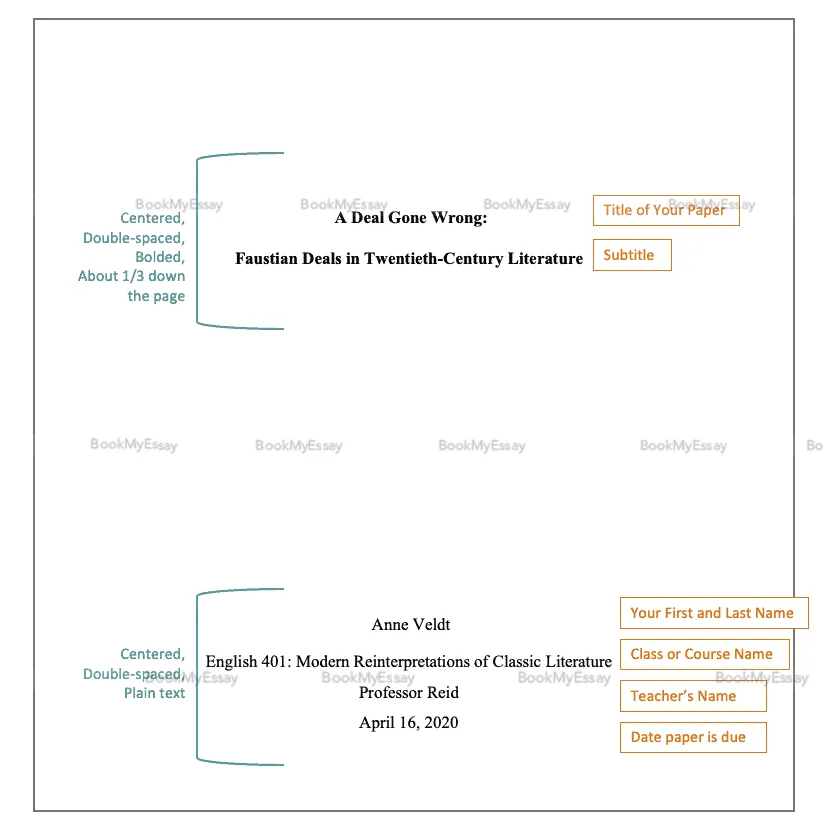
The Chicago Header Style is a distinctive formatting approach commonly utilized in academic and professional writing. It is characterized by a meticulous arrangement of information at the top of a document, particularly on the Chicago Cover Page. This style demands specific details such as the title, author's name, course information, and date, organized in a specific order. The title is centered, followed by the author's name aligned beneath it. Course details and the date are typically placed at the bottom of the page. The Chicago Cover Page, therefore, serves as a formal introduction, providing essential metadata about the document's content. Adhering to this style not only enhances the document's professionalism but also ensures conformity with the Chicago Manual of Style guidelines, a respected standard in academic and publishing circles.
What Is The Primary Purpose Of Chicago Header Style?
The primary purpose of the Chicago header style, particularly on a Title Page Chicago Style, is to provide a standardized format for academic and professional writing. In Chicago Style, the Title Page serves as a concise snapshot of essential information, including the title, author's name, course details, and institutional affiliation. The Chicago header style ensures a consistent and organized presentation, enhancing the overall readability and professionalism of a document. It adheres to a specific set of guidelines, such as font size, spacing, and alignment, to maintain a uniform appearance across diverse academic works. Additionally, the Chicago header style facilitates proper citation and referencing, aiding readers in locating the complete bibliographic information. Overall, the Chicago header style serves as a crucial element in scholarly communication, promoting clarity, credibility, and adherence to academic conventions.
How Does Chicago Header Style Differ From Other Citation Styles?
Chicago citation style, a widely used format in academic writing, stands out from other citation styles with its unique header style. When seeking assignment writing assistance, understanding this distinction becomes crucial. Unlike APA or MLA, Chicago employs a more flexible approach to headers, allowing for various formats. The primary distinction lies in the absence of a strict hierarchical structure, offering writers more freedom in organizing their content. Chicago headers often feature a mix of titles, subtitles, and author information, fostering a versatile and nuanced presentation. Assignment writing assistance providers need to be well-versed in the intricacies of Chicago style to ensure accurate and polished papers. Mastery of the Chicago header style is an essential skill for academic writers, contributing to the clarity and professionalism of scholarly work.
In Chicago Header Style, What Information Is Included In The Header?
In the Chicago style header, essential information is included to ensure proper documentation and organization of research papers. The header typically follows a simple method to complete the research paper in Chicago style. It comprises key elements such as the author's name, the instructor's name, the course title, and the date of submission. These details are aligned at the top of the title page or the first page of the document. Additionally, the title of the research paper is centered, and all these components are double-spaced. Adhering to the Chicago style header guidelines not only adds a professional touch to the document but also facilitates proper citation and identification of the academic work. This systematic approach ensures clarity and consistency in presenting research papers within the framework of Chicago style formatting.
Why Is It Important To Follow Chicago Header Style In Academic Writing?
Adhering to the Chicago header style in academic writing is vital for several reasons, especially when seeking assignment help free from plagiarism. This standardized formatting ensures a uniform and organized presentation of academic work, promoting clarity and professionalism. By following the Chicago style, writers provide accurate citations and references, attributing sources appropriately and avoiding unintentional plagiarism. Consistency in formatting, including headers, enhances the overall readability of assignments, facilitating a seamless flow of ideas.
Moreover, academics often use the Chicago style to assess a student's attention to detail and commitment to scholarly conventions. Failure to adhere to this style not only jeopardizes the integrity of the work but also raises concerns about the writer's academic diligence. Therefore, embracing the Chicago header style is not just a matter of aesthetics; it underscores academic rigor, integrity, and the pursuit of excellence in scholarly writing.
What Are The Key Elements Of A Chicago Header In BookMyEssay Assignments?
A Chicago-style header in BookMyEssay assignments comprises key elements that adhere to the Chicago Manual of Style guidelines. Firstly, it includes the student's name, positioned at the center of the page. Following that, the course information is placed, providing details such as the course name and number. Subsequently, the instructor's name is mentioned, followed by the assignment's due date. The header also incorporates a title, centrally aligned, which succinctly describes the content. Chicago formatting mandates the use of a legible font, typically Times New Roman or a similar serif font, and a font size of 12 points. Proper spacing, indentation, and a one-inch margin contribute to the professional appearance. By incorporating these elements, BookMyEssay assignments ensure a standardized and organized presentation, aligning with the Chicago style's emphasis on clarity and consistency in scholarly writing.
Popular Subject
- Cheap Homework Help
- Do My Essay Online
- London Assignment Writing Help
- Write My Assignment for Me
- A+ Certified Professional Assign...
- Yahoo! Query Language Assignment...
- Competition and Consumer Law Ass...
- Law Dissertation Assignment Help
- History Homework Writing Help
- Bamboo Flooring Assignment Help
- AP Style Writing Assignment Help
- Business Cycle Assignment Help
Rating

Charles
Australia
Rating:
Everything is good and helpdesk supports is cooperative, all problems of my assignment are solved perfectly.

Johnson
USA
Rating:
Thank you BookMyEssay for all your great services. I am so happy that I get this assistance with my study.

 3 Bellbridge Dr, Hoppers Crossing, Melbourne VIC 3029