UNITED KINGDOM
 Australia
 World
World
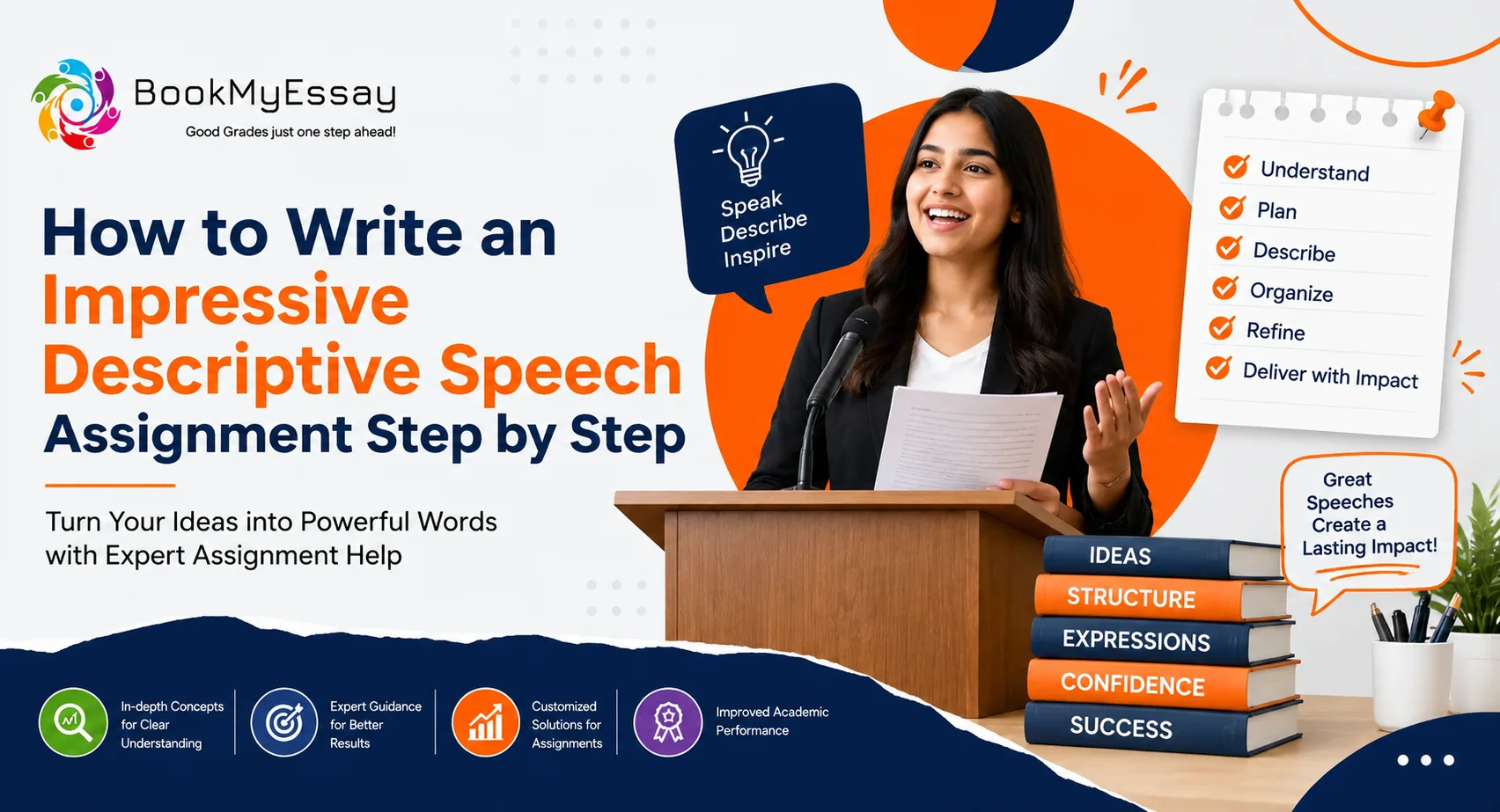
Writing a descriptive speech assignment requires more than simply describing a person, place, object, or experience. A successful speech should create a vivid picture in the listener’s mind while maintaining a clear structure, engaging language, and logical flow. Students often seek descriptive speech assignment help when they need guidance on organizing ideas, improving descriptions, or making their speech more effective. With the right approach, you can create an impressive assignment that captures attention and communicates your message clearly.
Understand the Purpose of a Descriptive Speech
The first step is to understand what your assignment requires. A descriptive speech focuses on helping the audience visualize a specific subject through words. Unlike a general informative speech, it often uses sensory details such as sight, sound, smell, taste, and touch.
Before writing, carefully read the assignment instructions and identify the topic, required word count, formatting style, and presentation expectations. A clear understanding of the requirements helps you avoid unnecessary information.
Choose an Interesting Topic
Your topic plays an important role in making your speech engaging. Choose something you know well or genuinely find interesting. You could describe a memorable location, a special person, a cultural event, an inspiring object, or an unforgettable experience.
A focused topic is usually more effective than a broad one. Instead of describing an entire city, for example, you could focus on a particular landmark or neighborhood. This allows you to include more specific and meaningful details.
Research and Collect Relevant Details
Once you select your topic, gather useful information. If your speech is based on personal experience, make notes about what you remember. If research is required, use credible academic and educational sources.
Focus on details that support your main purpose. Avoid filling the speech with unrelated facts. Your goal is to create a strong mental image while keeping the audience interested.
Create a Clear Structure
An impressive descriptive speech generally includes three major sections: an introduction, body, and conclusion.
Introduction: Start with an interesting statement, question, short story, or vivid description. Introduce your subject and explain what the audience can expect.
Body: Divide the main content into logical points. Each paragraph should focus on a particular aspect of your subject. Use transitions to connect ideas smoothly.
Conclusion: End by summarizing the main idea and leaving the audience with a memorable thought, image, or emotional impression.
A well-organized structure makes your assignment easier to follow and gives your speech a professional quality.
Use Sensory and Descriptive Language
Sensory language is one of the most important elements of a descriptive speech. Instead of simply stating that a place was beautiful, explain what made it beautiful. Describe its colors, sounds, atmosphere, textures, or smells.
For example, rather than writing, “The garden was peaceful,” you could write, “Soft sunlight filtered through the green leaves while the gentle sound of birds filled the quiet garden.”
Specific details make your writing more engaging and help your audience imagine the subject.
Revise and Proofread Your Assignment
After completing your first draft, take time to revise it. Check whether your ideas are organized logically and whether your descriptions are specific enough. Remove repetitive sentences and replace vague words with stronger alternatives.
Proofread carefully for grammar, punctuation, spelling, and sentence structure. Reading your speech aloud can also help you identify awkward phrases and improve its natural flow.
Get Academic Guidance When Needed
Students working on multiple academic subjects may need different types of support. For mathematical tasks, formula solver assignment help can provide useful guidance with understanding formulas and solving complex problems. Similarly, students studying literature may benefit from verse prose assignment help online when they need assistance understanding literary forms, themes, structures, and textual analysis.
For descriptive speech assignments, academic guidance can help you understand expectations, organize your ideas, and improve your writing approach.
Conclusion
Writing an impressive descriptive speech assignment becomes easier when you follow a step-by-step process. Start by understanding the requirements, select a focused topic, gather relevant details, organize your ideas, and use vivid sensory language. Finally, revise and proofread your work before submission.
If you need additional academic guidance, BookMyEssay can help you approach your assignments with greater confidence. Whether you are working on descriptive speeches or other academic subjects, structured support can help you develop clearer ideas, stronger organization, and more effective written work.



 3 Bellbridge Dr, Hoppers Crossing, Melbourne VIC 3029